


Many people do not take the first signs of varicose veins seriously, considering them only a cosmetic defect.Actually this is not true.The disease is complex, complex, it can significantly worsen a person’s overall health and lead to dangerous consequences.
In addition, it negatively affects the well-being, performance and appearance of the patient.Therefore, early diagnosis and proper treatment will help prevent the development of the disease and protect the body from many negative manifestations of varicose veins.
Causes and symptoms of varicose veins
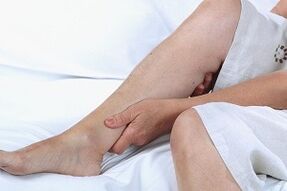
Most researchers consider heredity to be one of the main reasons why varicose veins develop.If there have been cases of varicose veins in the family, it can be argued that members of the family have a much higher risk of getting the disease.
The next most common case is increased stress on the legs, leading to disruption of the outflow of blood and the functioning of the venous valves.People at risk are those who are overweight, have a sedentary lifestyle, have a sedentary job, or spend a lot of time on their feet.Smokers, people with hormonal and endocrine disorders, blood diseases, and heavy physical activity are also at risk of getting the disease.
In order to identify the causes of the disease, timely diagnosis of varicose veins in the legs is very important.People with a family history of the disease should be tested regularly, even if there are no symptoms.If symptoms appear, this should be done as quickly as possible.
As with other diseases, varicose veins “captured” in the early stages can be treated much more effectively.
The patient manages to prevent the rapid development of the disease and the appearance of extremely unsightly and very painful nodes on the limbs.
Signs of varicose veins may include the following:
- Heaviness in the legs, which increases significantly after the slightest load, but can also appear in a state of complete calm.
- Swelling that forms in the lower part of the leg, in the area of the ankle and instep of the foot.
- Pain in the legs, which manifests itself as dull aching pain, cramps, sensations of tissue “expanding” from the inside and burning, especially after exercise.
- The appearance of thrombophlebitis, that is, an inflammatory process in the wall of a vessel filled with a blood clot.
As the disease progresses, the walls of blood vessels become wider, thinner and form large varicose veins.They can be located in different places (hemorrhoids are a particular form of varicose veins), but are especially noticeable and painful on the lower extremities.If the disease is neglected, it will be difficult for the patient to move, he will suffer from constant pain, his health will worsen, and his performance will decrease.
Without treatment or if it is chosen incorrectly, varicose veins can have an extremely negative impact on health and lead to the development of many dangerous complications.
Stages of the disease
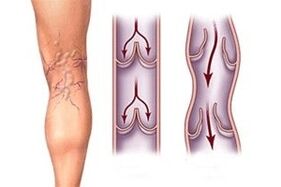
Symptoms of varicose veins depend on the stage of the disease.
According to international standards, 6 stages of the disease are taken into account:
- Stage 0– the very beginning of the disease, when the patient himself may not even suspect that he is already sick.There are no external manifestations, but a person periodically has complaints of pain and heaviness in the legs, cramps and swelling that come at night after the slightest exertion.Signs of the disease may not be detected even with a full examination, but their manifestation can be expected at any time.
- Stage 1– at this stage, in addition to the patient’s complaints, spider veins or even a network of them appear on the legs.Seeing a doctor for a full diagnosis and starting treatment can prevent the development of a full-blown disease and preserve the beauty and health of your feet.
- Stage 2– is considered to be varicose veins.During this period, a full “set” of signs is observed - from the patient’s constant complaints to the development of enlarged veins and the formation of nodules under the skin of the extremities.Symptoms and external manifestations intensify significantly after exertion, walking in heels or prolonged immobile sitting.
- Stage 3– the patient’s condition worsens, as swelling is added to the existing symptoms.Usually it goes away after a night's rest, but by the evening the patient's legs again become very swollen and painful.Edema leads to stagnation of nutrients, the skin turns dark, swells and hurts.Inflammatory processes gradually arise from small areas to large affected areas.When an infection occurs, erysipelas occurs with weeping superficial lesions, which are very difficult to cure.Whitish areas of atrophied skin appear on the body, which subsequently threaten to turn into trophic ulcers.
- Stage 4– the patient’s condition is complicated by the appearance of trophic ulcers, which so far have been able to heal successfully.
- Stage 5– non-healing trophic ulcers.The general condition of the patient is unsatisfactory.
Correctly performed diagnosis of varicose veins on the legs will help not only identify the disease itself, but also the stage of the disease.The smaller it is, the easier the treatment will be and the faster the optimal effect can be achieved.
Possible complications
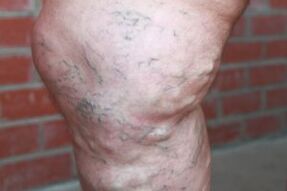
Advanced varicose veins can be complicated by eczema and thrombophlebitis.
If the disease is not treated or inappropriate remedies are used, it can be complicated by the following problems:
- Trophic ulcers.They are painful, look unsightly, can become very inflamed and are very difficult to treat.If the cause is not eliminated, they may open again and again.
- Acute form of thrombophlebitis of the superficial veins.
- Phlebothrombosis.
- Bleeding from nodes formed from thinned vessels with varicose veins.They arise due to ruptures in the walls of blood vessels, leading to massive bleeding.If it is not stopped in time, the blood loss can be so significant that it can be fatal.
- Thromboembolism, that is, the separation of a blood clot and its transfer by the blood flow to another place where it can cause thrombosis.If it enters a large vessel, such as the pulmonary artery, the embolism can cause serious problems or death.
- Milky or blue swelling.These conditions indicate damage to various blood vessels, bring severe suffering, cause the development of trophic ulcers and can sometimes become the beginning of tissue death due to a sharp disruption in their nutrition.This can lead to amputation of the limb in particularly severe cases.
Diagnostic methods
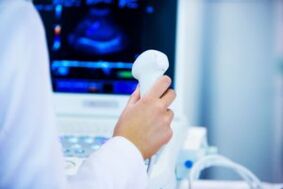
The main diagnosis of varicose veins in the legs is the Doppler ultrasound method.With this method, the doctor can detect not only dilated veins, but also assess the condition of the valves of the deep and superficial veins, and identify the presence of blood clots or other formations in the lumen of the vessels.
The procedure is painless for the patient; it is performed in a supine or stomach position; sometimes the doctor asks the patient to undergo an additional procedure while standing in order to identify lesions that are invisible in another position.
No preparation is required for the examination.
Additionally, the patient may be prescribed other types of examinations and tests.A blood test is important, which shows the condition of the fluid and its tendency to increased thrombus formation.
Features of treatment
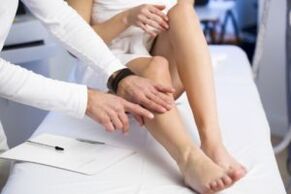
After varicose veins in the legs are diagnosed, the doctor will select the appropriate treatment, which depends on the stage of the disease.
All types of effects on the disease can be divided into the following:
- Conservative.
- Surgical.
The latter methods are resorted to when the condition is already very advanced and it is not possible to achieve a positive effect using conservative methods.In this case, surgical excision of the affected areas of the veins is performed.Immediately after the intervention, special compression garments are required.Usually, within a day after the operation, the patient is allowed to go home.
If the disease is detected on time, you can resort to a conservative method.It includes medication, sclerotherapy or laser coagulation and compression.
The selection of medications depends on many reasons, so it is selected individually for each patient by the attending physician.
Most often, the list of medications includes anticoagulants, that is, substances that thin the blood and prevent the formation of blood clots, as well as anti-inflammatory drugs to treat phlebitis and stop its spread.
Sclerotherapy is a procedure in which a special substance is injected into a vessel by injection, which causes the walls of the vessel to stick together.A scar is formed, the diseased vessel is “switched off” from the blood circulation, and over time it dies and resolves.There are no traces left on the surface of the body from the blue vessels or “stars” that were previously there.The procedure is performed very quickly and does not require anesthesia.
If larger vessels need to be removed, the laser coagulation method is used.For this purpose, under local anesthesia, a special light guide is inserted into a vein, which conducts a laser beam.It literally seals the vessel, clotting the blood in it.As a result, it dies in the same way as smaller vessels during sclerosis.
Wearing compression garments is prescribed by a doctor, who also selects the type and class of the product.The use of such a remedy can also be preventive.For this you need special (not medicinal!) hosiery.They are indicated for people at risk, those who spend a lot of time on their feet or sitting without moving.
Prevention

An active and healthy lifestyle is the best prevention of varicose veins.
The development of varicose veins can be prevented by following these recommendations:
- Lose weight.The presence of obesity or overweight contributes to the development of many diseases, including varicose veins.
- Remove excessive stress on the veins, including those caused by intense sports activities.The main “provocateurs” are weightlifting, bodybuilding, and tennis.
- Stop wearing uncomfortable shoes with very high heels every day.It should be used only on special occasions, and for everyday wear, shoes with lower and more stable heels are suitable.
- Avoid using stockings and underwear with elastic bands that squeeze blood vessels.Things with rubber bands are especially dangerous.
- Avoid taking too long hot baths, visiting baths and saunas, or staying in direct sunlight.
- Smoking can be one of the factors that provoke disturbances in the functioning of the circulatory system, so it should also be avoided.
Moderate exercise, regular walks, interrupting work while standing or sitting to walk a little or do exercises will help you never become acquainted with this dangerous and unpleasant disease - varicose veins.